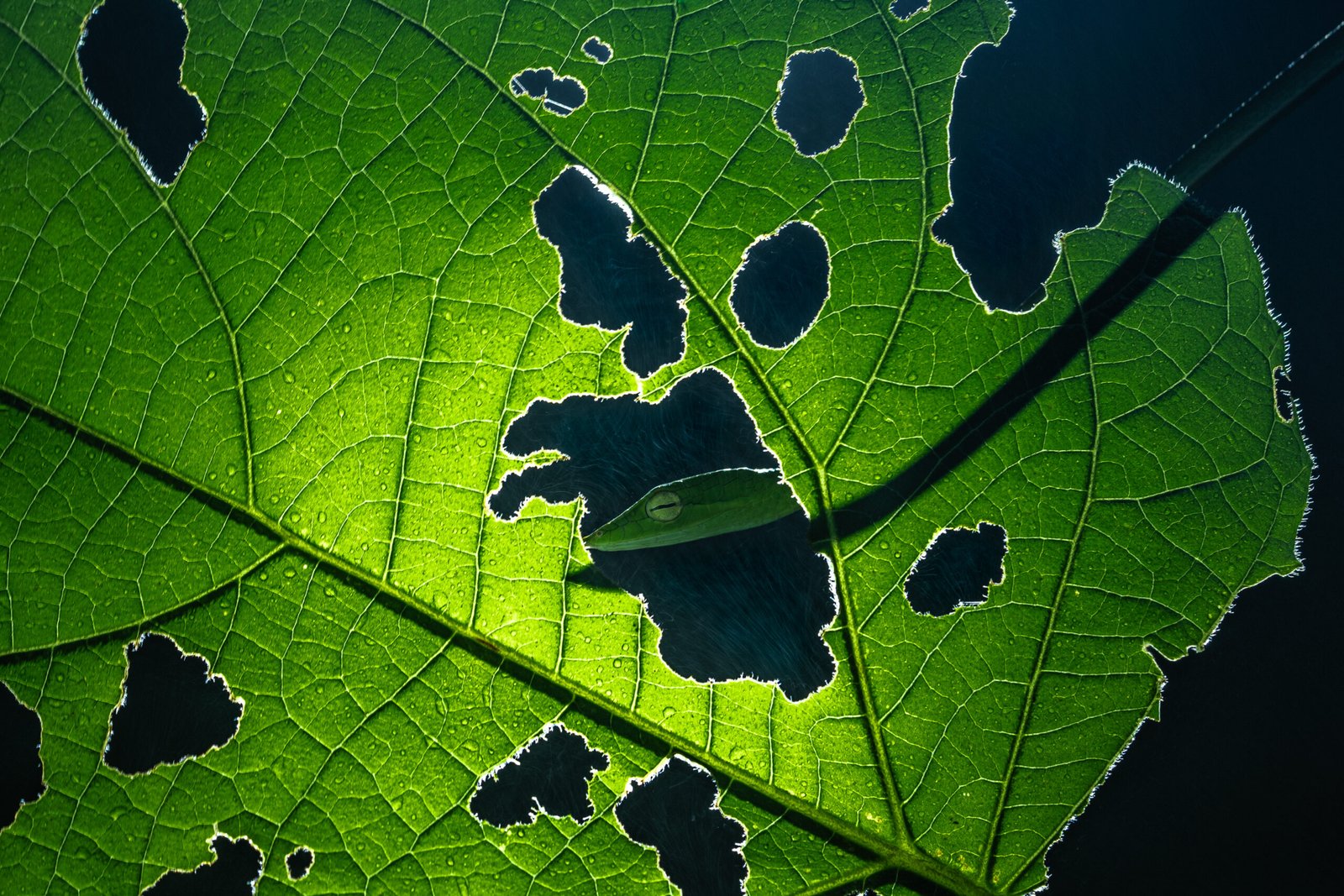
The rain had stopped. I was standing somewhere in the Amboli forest with my headlamp on, trying to see anything in the thick darkness. That’s when I noticed it. A vine snake, perfectly still behind a torn leaf.
Walking through a rainforest to photograph wildlife is honestly exhausting. You’re carrying an umbrella, wearing gum boots that feel heavy with every step, a raincoat that makes you sweat even in the cool forest air, and all your camera gear sealed in multiple layers of waterproof bags because one drop in the wrong place and everything is ruined. You move slowly, carefully, because one wrong step could mean disturbing something that might defend itself. And I mean this quite literally-we’re entering their home, and whether we realise it or not, our presence can be threatening to them.
Then there are the leeches. If you’ve never experienced a leech bite, consider yourself fortunate. They’re persistent, and finding one attached to you later is deeply unpleasant.
But here’s the thing. Despite all of this, the gear, the leeches, the constant awareness that we’re guests in a space where creatures live and might defend their territory if we accidentally intrude-I keep going back.
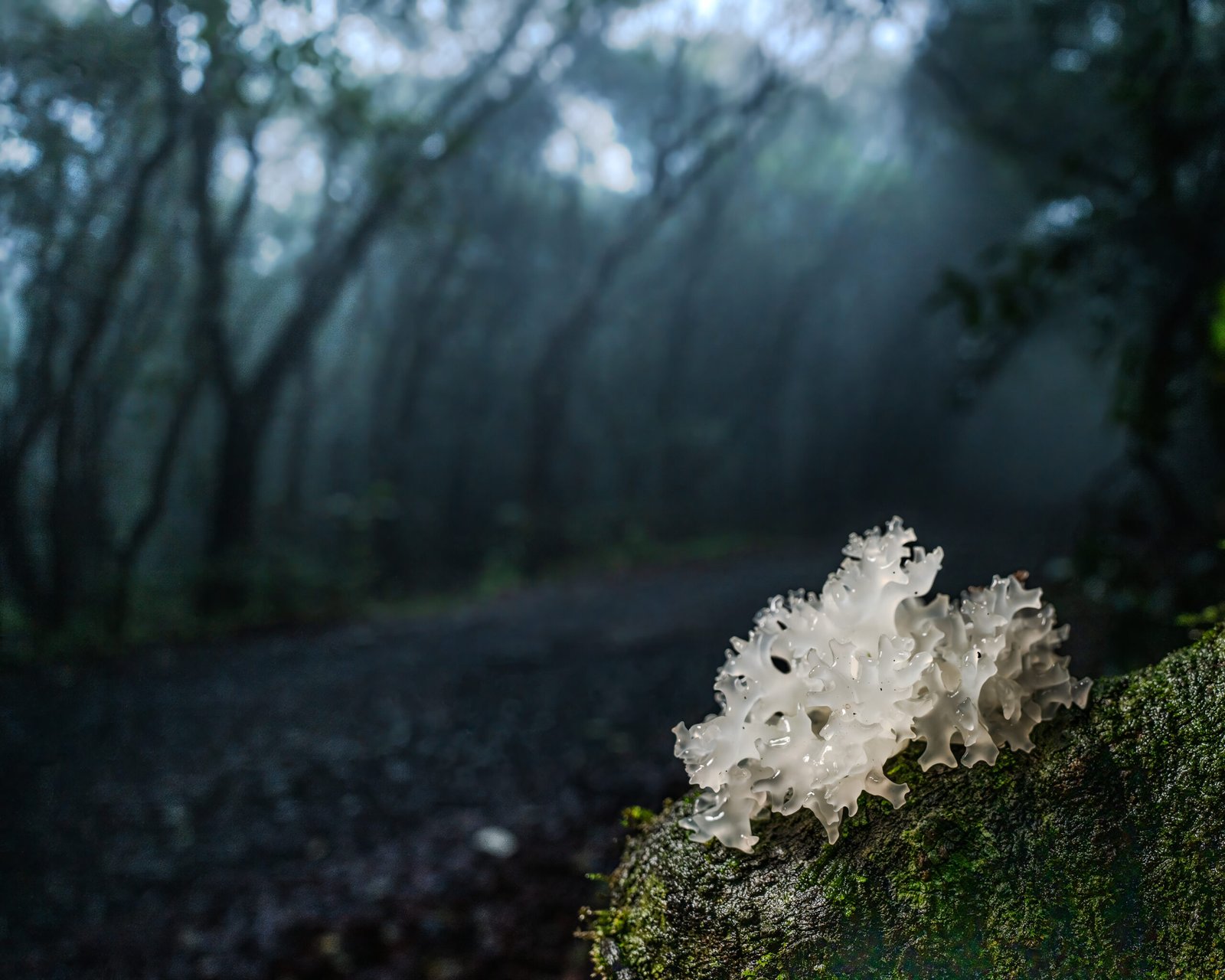
There’s something about being in a rainforest that I can’t quite put into words. You see things that most people will never see in their entire lives. The place feels alive in a way that’s different from anywhere else. You don’t want to leave.
The Moment
I’ve been afraid of snakes since I was a child. The stories people tell, the way adults react when they see one; it all adds up. Even now, that fear sits somewhere in the back of my mind.
But when I saw this vine snake behind that ruptured leaf, something felt different. There was a natural barrier between us. I could watch it without disturbing it, and it seemed unaware of me. The rain had stopped. The forest was quiet. In a place where you can barely see anything without a headlamp, this felt like a small gift.
I started adjusting my light carefully, moving very slowly. The snake could move away at any moment if I created too much disturbance or if the light was too harsh. Everything had to align properly: the angle, the light, the snake staying where it was, my hands staying steady. I took the shot.
What Makes Them Different
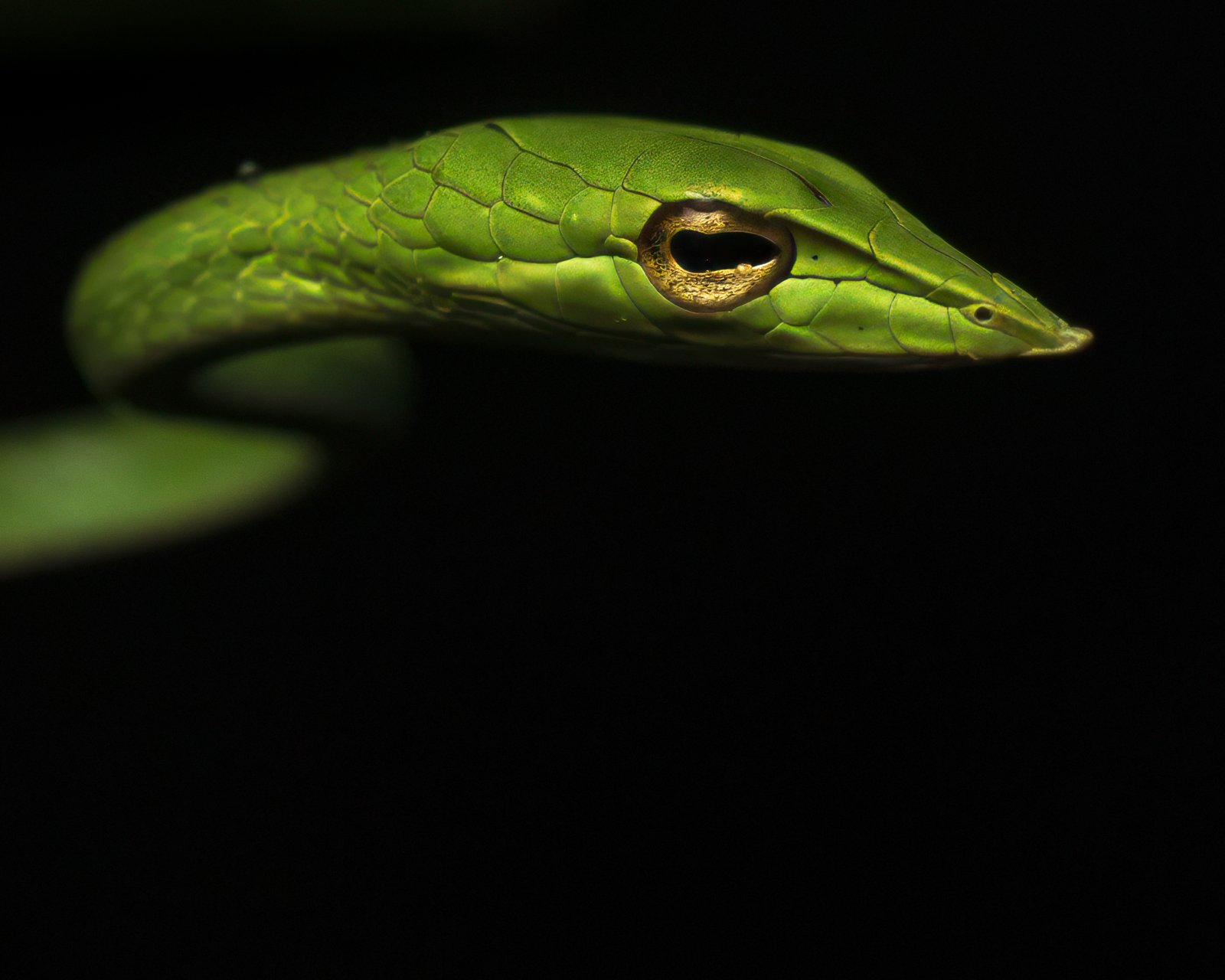
Vine snakes are genuinely remarkable. Their bodies are impossibly thin, like someone stretched a snake until it became pencil-width. They’re bright green or brown, depending on where they live and what they need to blend with. Their heads are pointed and their eyes are unlike most snakes, i.e. horizontal pupils, shaped almost like keyholes. This gives them excellent depth perception, which matters when you’re trying to catch a lizard or frog that’s moving quickly through branches.
They hunt by becoming invisible. A vine snake moves extremely slowly, swaying just slightly as it stretches along a branch. It looks exactly like a thin vine moving in a breeze. Prey animals walk right past them. When the moment is right, they strike.
If something threatens them, they have a different strategy. They puff up the front of their body and open their mouth wide, revealing black and white patterns between their scales that you don’t normally see. Suddenly, this delicate creature looks much more intimidating. It’s a warning, really—a way of saying “please leave me alone” without having to actually defend themselves. Usually it works.
The Venom Question
Yes, vine snakes are venomous. But before that word creates unnecessary fear, let me add context. Their venom is designed for small animals, lizards and frogs mainly. The fangs are at the back of their mouth, not the front, which means they’re not built for defensive biting.
Bites on humans are extremely rare because these snakes would rather escape than defend themselves against something as large as us. They’re not aggressive. They don’t seek confrontation. Usually, in the few cases where bites have happened, when someone accidentally stepped on one or cornered it, the effects were mild and localised. Nobody has died from a vine snake bite(as per my limited understanding, I could be wrong here). But if you see one, instead of panicing call a naturelist from your neighbourhood who can help.
Understanding this doesn’t eliminate my wariness around them, but it does help me see them more clearly. They’re not dangerous creatures waiting to attack. They’re animals protecting themselves in their own home, reacting to what they perceive as threats when we unknowingly intrude into their space.
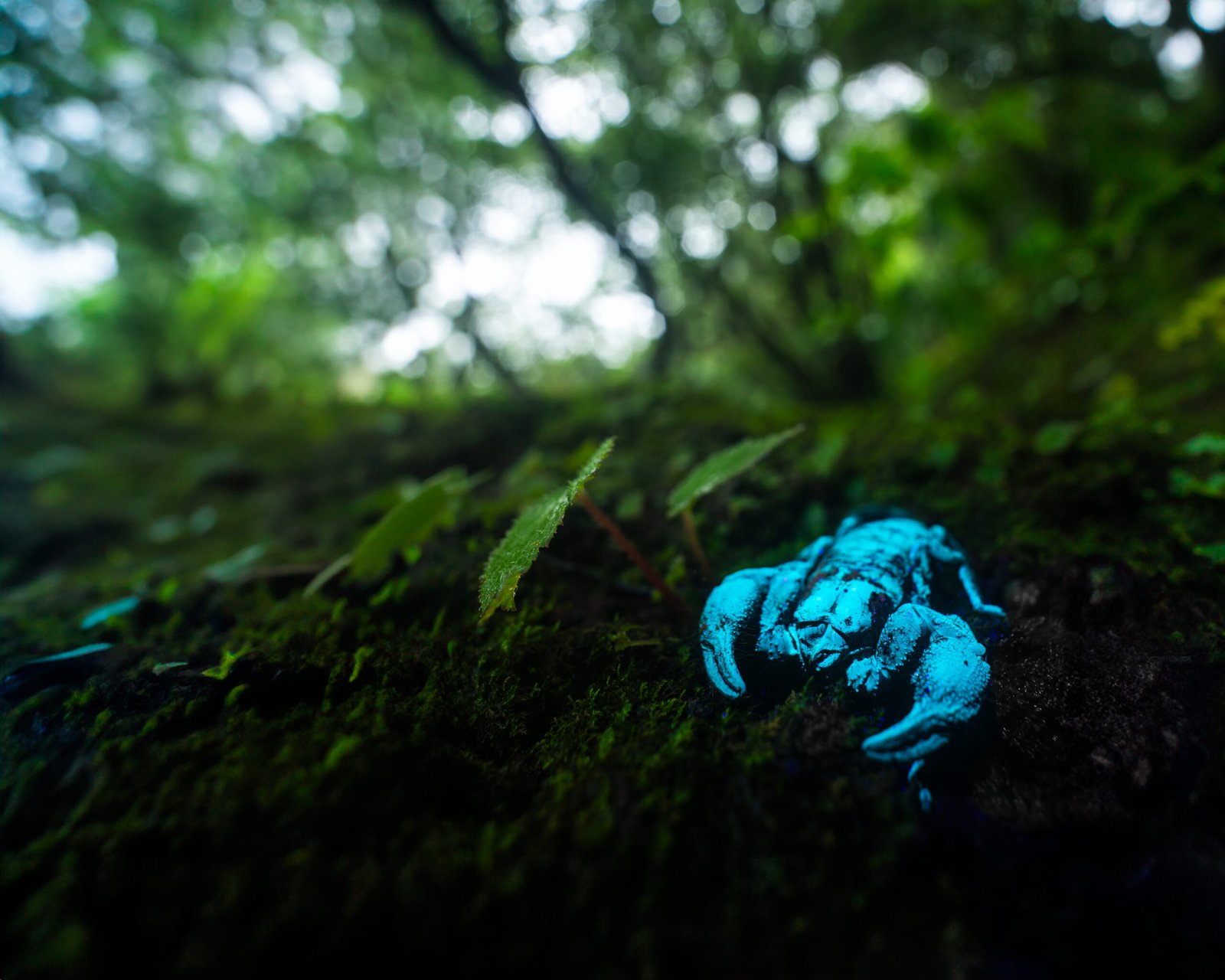
What Stays With Me
I didn’t stop being wary of snakes after that evening in Amboli. The fear doesn’t just disappear. But it’s now mixed with something else; maybe respect is the right word. Or appreciation for how precisely this animal is adapted to its world, how it’s survived for millions of years in these mountains, how it fits into a system so complex that we’re still discovering new species within it. It’s important to learn and understand about wildlife behaviour rather than believing in myths.
The moment will stay with me, and I keep on recalling that there’s so much happening in places most people never visit. Not because these places are exotic or mysterious, but because they’re remote, difficult to access, and frankly uncomfortable to spend time in. But they exist. The animals living there exist. And they don’t need us to survive; they need us to not destroy what they require to survive. More importantly, they need us to remember that we’re the visitors in their home, not the other way around.
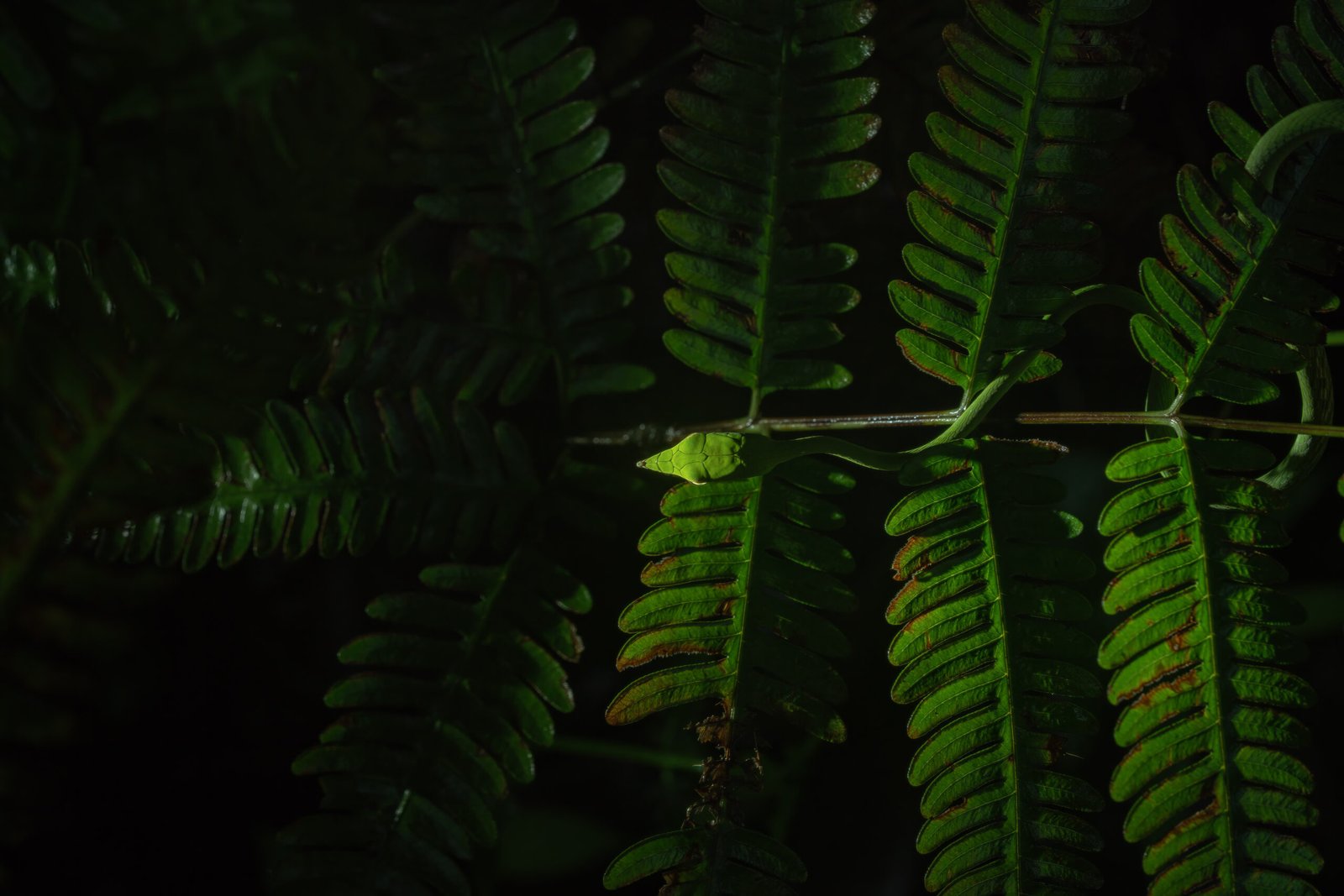
I’ll keep going back to the rainforest. I’ll keep dealing with the leeches and the rain and the heavy gear and the darkness. Because occasionally, if you’re patient and quiet and lucky, you get to witness something like a vine snake behind a leaf, living its life completely unbothered by your presence. Those moments don’t sensationalise well. They’re quiet. But they matter.
This photograph of the vine snake, along with twelve other moments from India and Kenya’s wild places, is part of my 2026 desk calendar, “13 Moments from the Wild- by Abhisek Bagaria”. It’s a limited edition, so if you’re interested, grab one while they’re still available.
I’m offering a 25% discount with the code vinesnake25. Right now, I’m only shipping within India, but if you’re reading this from somewhere else and want a copy, get in touch, and we’ll figure something out.