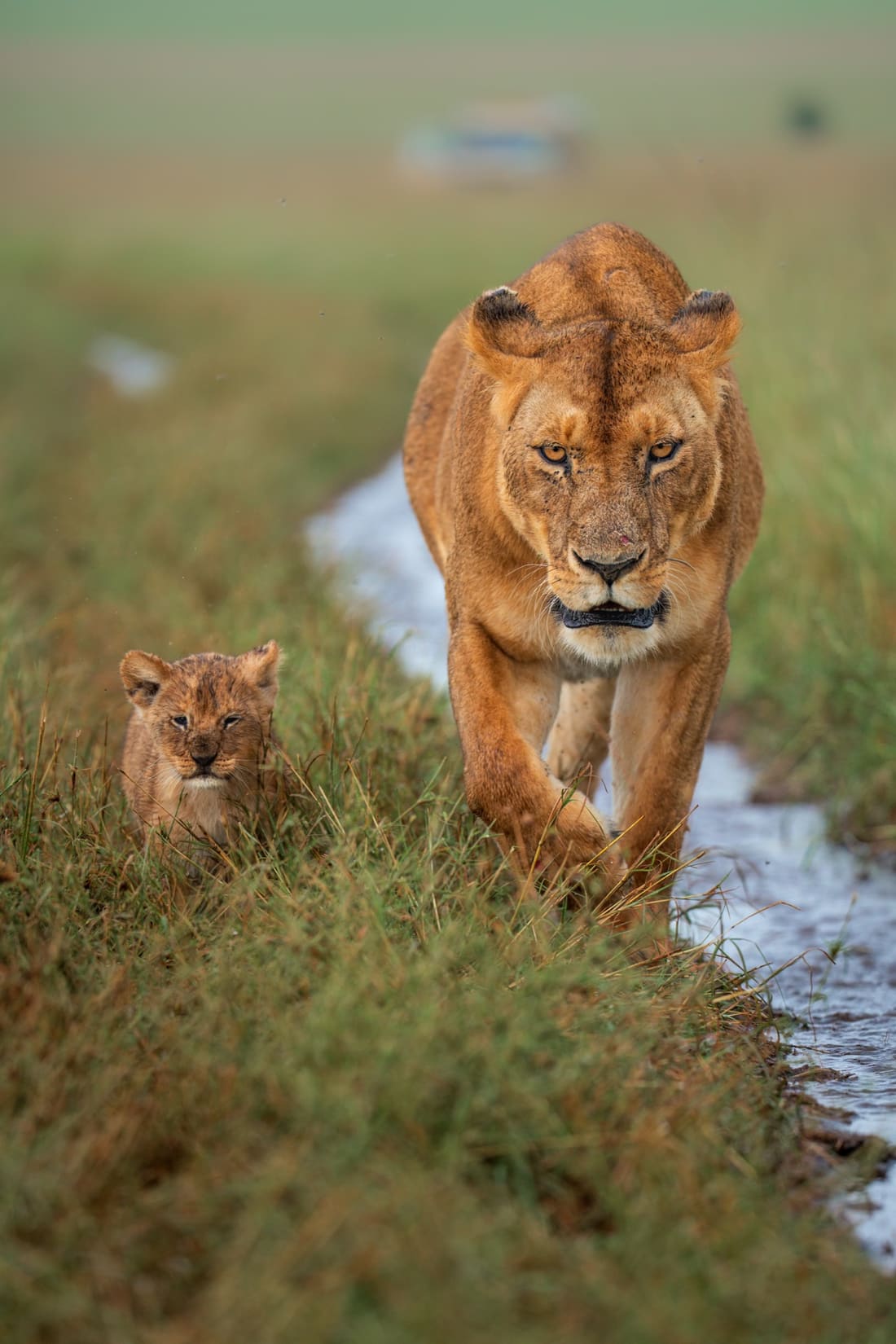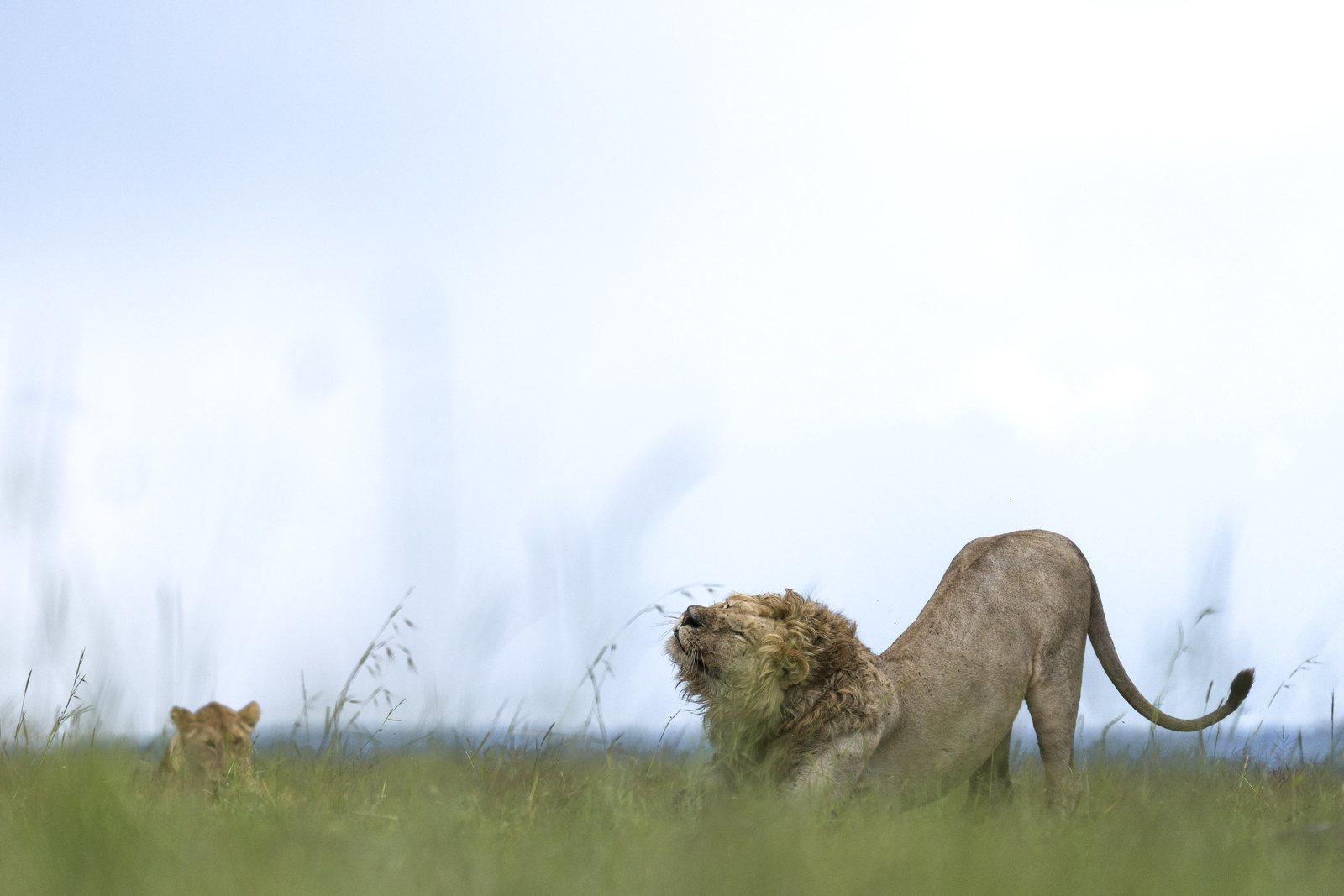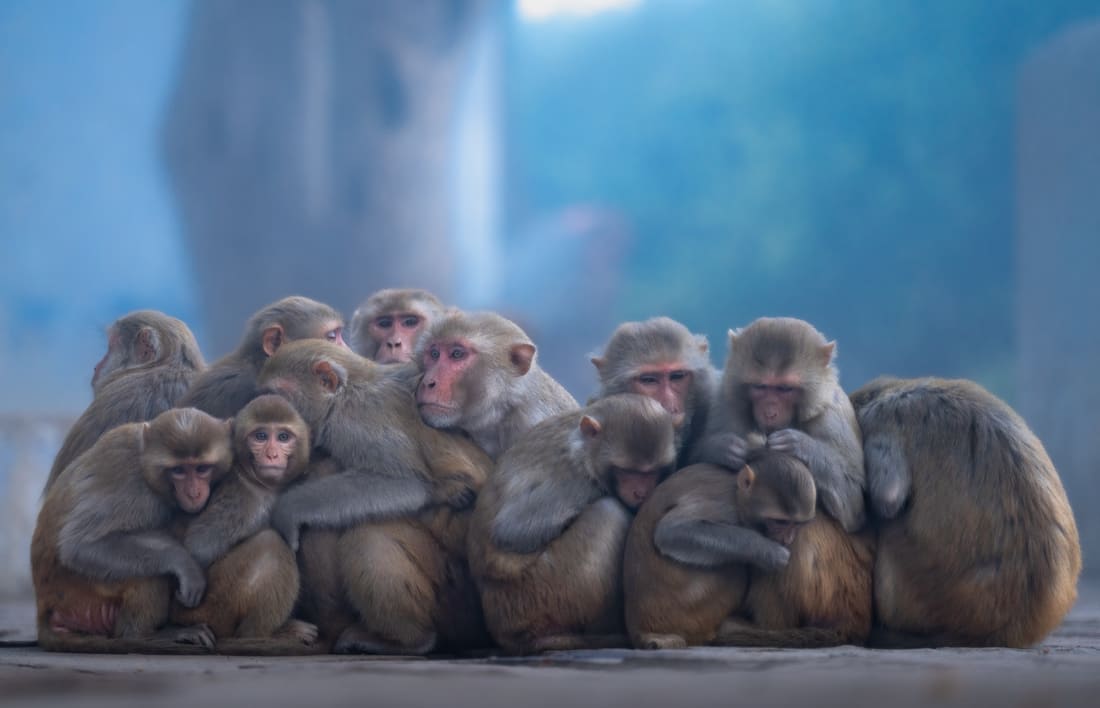


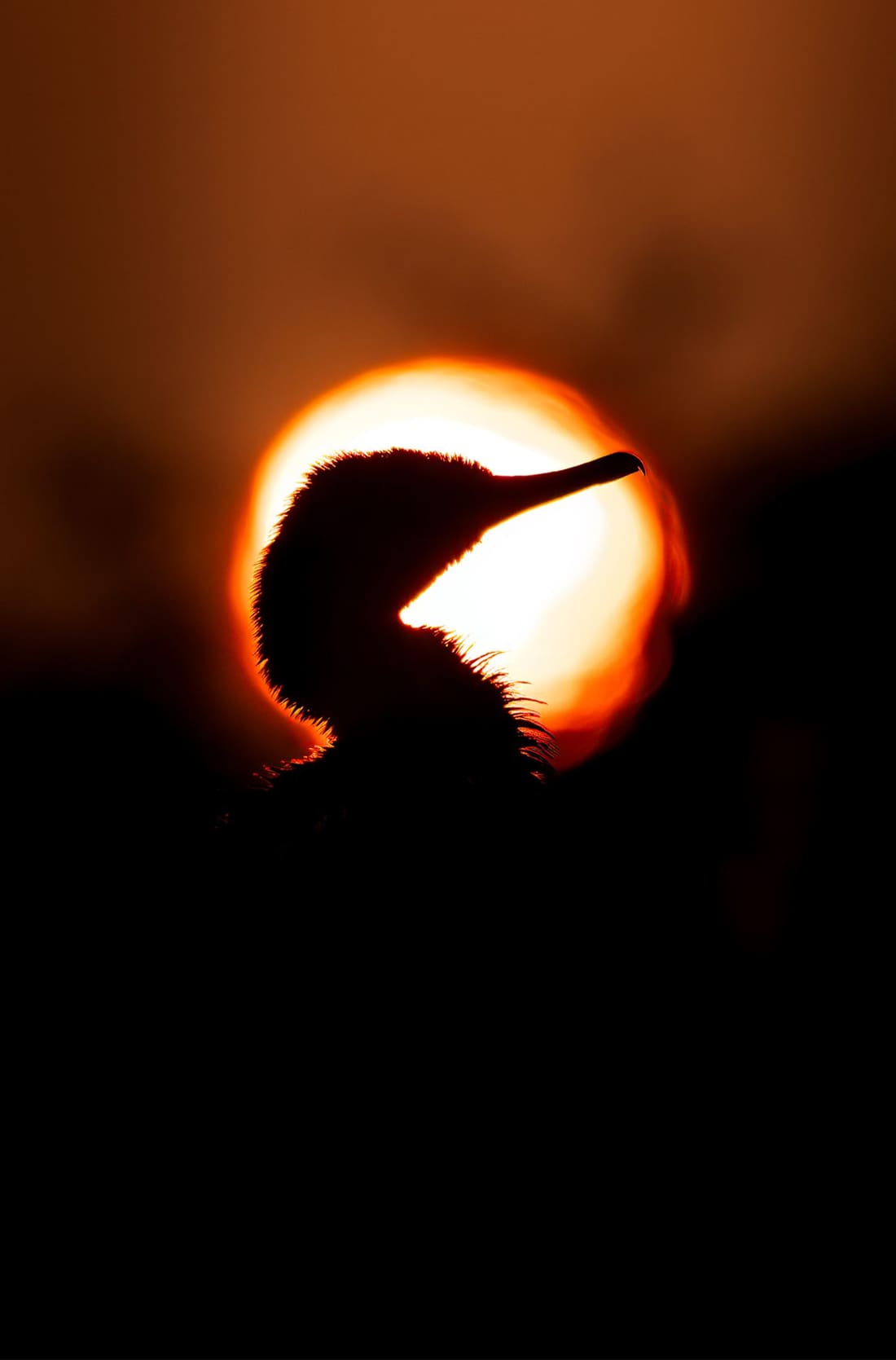



Out in the wild, the world has no edges. The forest runs on past the trees you can pick out, the grassland keeps going over the next rise, and the sky has no border at all. Then you lift the camera, and in an instant you draw a line around one piece of it. Everything inside that line is the photograph. Everything outside it is gone.
I keep coming back to one simple question. Why does drawing a border around a scene change the way we feel about it so completely?
Your first decision is the frame
When we are starting out, it is easy to think the whole job is to aim the camera at something beautiful and press the button. But a camera is really an instrument of selection. Long before shutter speed or aperture, you have already made the first creative decision of the picture: where to put the edge.
That edge is not a technical setting. It is the beginning of the story. Choosing it well is the same discipline as subtracting the noise from a frame. You are deciding what the viewer is allowed to see, and what you will quietly leave out.
The power of the edge
The edge of a photograph does something quietly strange. It cuts through shapes we know and sets unexpected things side by side, and we accept the result as though it were always meant to be that way.
Here is how I hold it in my head. The frame is to a photograph what the cushion is to a billiard table. Every element inside it bounces off those four sides. A wing, a horizon, the curve of an animal's back: each one takes its meaning from how it meets the border, or just misses it.
It works between subjects too. Put a topi at one edge and a lone acacia across the frame, and the strip of empty space between them becomes a line the eye keeps crossing. Two separate things, read as a single relationship, decided entirely by where the border falls.
 First light, topi. Two shapes held near opposite edges, and the quiet between them becomes the subject.ISO 1000 · f/2.8 · 1/640s · 200mm
The edge creates relationships
Once you see the frame as a set of edges, every photograph becomes a question of placement.
Picture a lone elephant walking toward the left side of your frame. Put the left edge hard against its face, and the viewer feels tension: the animal looks about to walk into a wall, with nowhere left to go. Now shift the camera and leave a wide stretch of open space in front of it instead. At once there is room to move, a sense of journey, somewhere to walk to. Nothing about the elephant changed. You moved the edge, and the edge changed the feeling.
The elephant at the top of this essay is the quiet version of that choice: one animal left small under a wide sky, given far more room than it needs, so it reads as alone rather than crowded. Push that openness further and the empty space stops being a setting and becomes the subject.
 Far in the clouds a zebra harem, Masai Mara. The edges hold almost nothing but white, so the space becomes the picture and the zebras become its punctuation.ISO 100 · f/2.8 · 1/500s · 70mm
Find a frame within the frame
The environment will hand you edges too, if you look for them. This is the old idea of a frame within a frame: an overhanging branch, a gap between two rocks, the dark mouth of a hollow or a den. Place your subject inside one of these natural borders and two things happen at once. The picture gains a real sense of depth, of near and far, and the viewer's eye is led straight to where you want it.
 In the hollow, Keoladeo. The dark rim of the hollow is a second frame inside mine, and it points the eye at the one thing that matters.ISO 4000 · f/6.3 · 1/640s · 600mm
You do not need a cave for this. A lattice of bare branches will do the same work, as long as you let it sit there on purpose rather than by accident.
 Among the branches, Kaziranga. The branches reach the edges on purpose, so they frame the gibbon instead of fighting it.ISO 160 · f/7.1 · 1/1250s · 500mm
Check your edges before you press
I look at a lot of photographs from people starting out, and the same small wound shows up again and again: a tail clipped off, the tip of an ear cut by the border, a foot half outside the picture. I understand exactly how it happens. A rare animal appears, the adrenaline jumps, and we lock our whole attention onto the subject. The rest of the viewfinder simply disappears.
Getting the animal at all is a fine place to start, and when the action is fast you should take the picture. But in my limited understanding, the moment you slow down and read your borders on purpose, your images stop being snapshots and start becoming something you meant to make.
So here is a small habit to build. Before you press the shutter, when you have the time, pull your eye off the animal for one second and run it around the frame: top, bottom, left, right. Ask what is touching each edge, and whether you want it there.
Watch for tangents
While you scan, look for tangents. A tangent is when an element just barely touches the edge of the frame, or just grazes another shape in the picture. The eye reads it as an awkward collision, and it quietly cheapens an otherwise good photograph.
The fix is to commit in one direction or the other. If a branch is kissing the edge, either zoom out and give it room to breathe, or zoom in and cut it cleanly out of the picture. Half in is the only wrong answer. It is the same firmness you need when you choose the telling detail over the whole animal: you decide what belongs inside the line, and you hold to it.
Take these two frames from one morning on a Chambal sandbank. In the first, the gharial runs almost the full width of the picture, snout near one edge and tail near the other, so the frame feels stretched tight with no breath at either end.
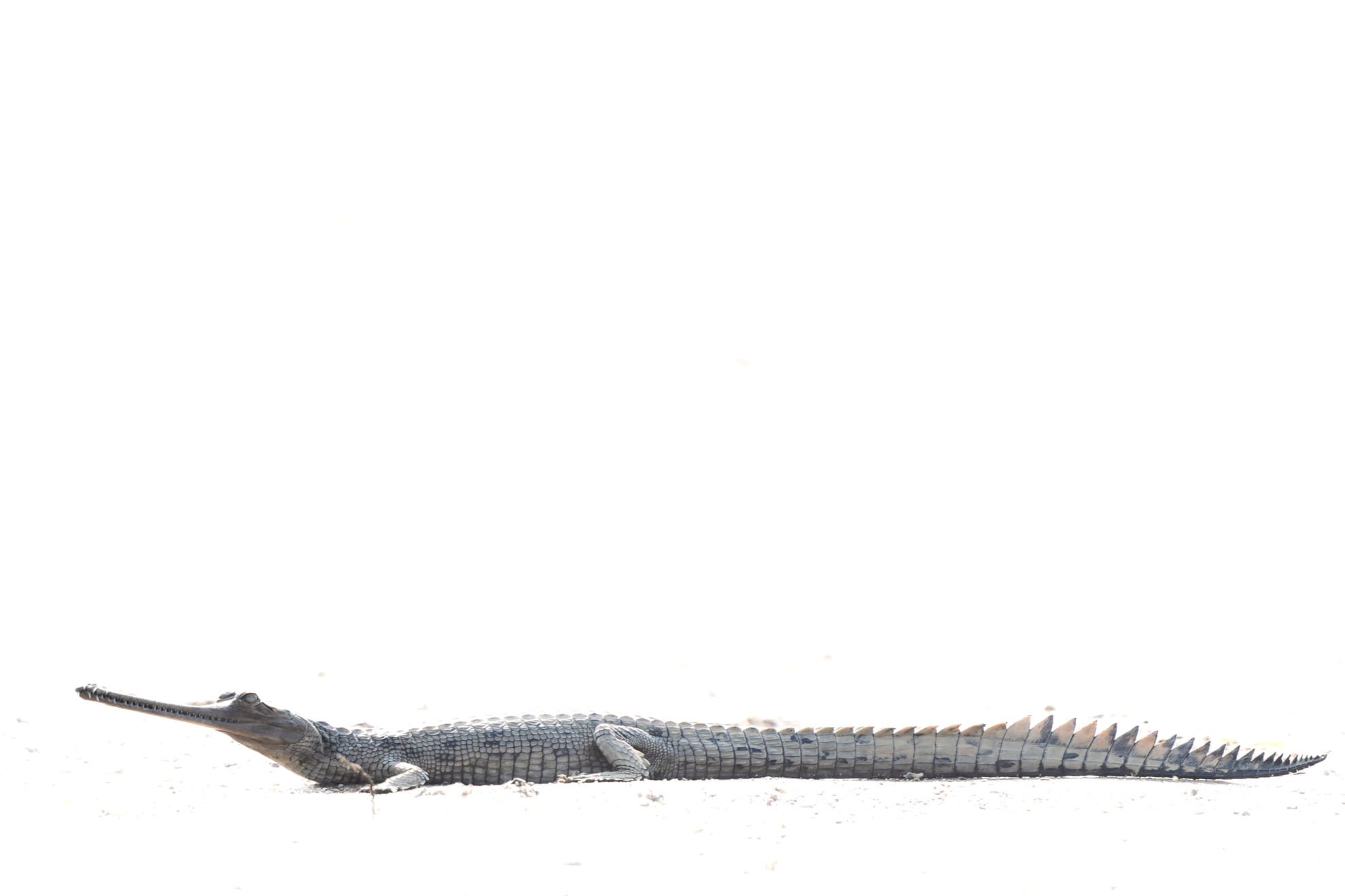 Edge to edge, Chambal. The body nearly reaches both sides at once, and the frame holds under tension.ISO 100 · f/6.3 · 1/1250s · 600mm
In the second the crop is decisive: cut cleanly through the body, with open space left ahead of the jaws. Same river, a different decision about where the edges fall, and the tension turns into intent.
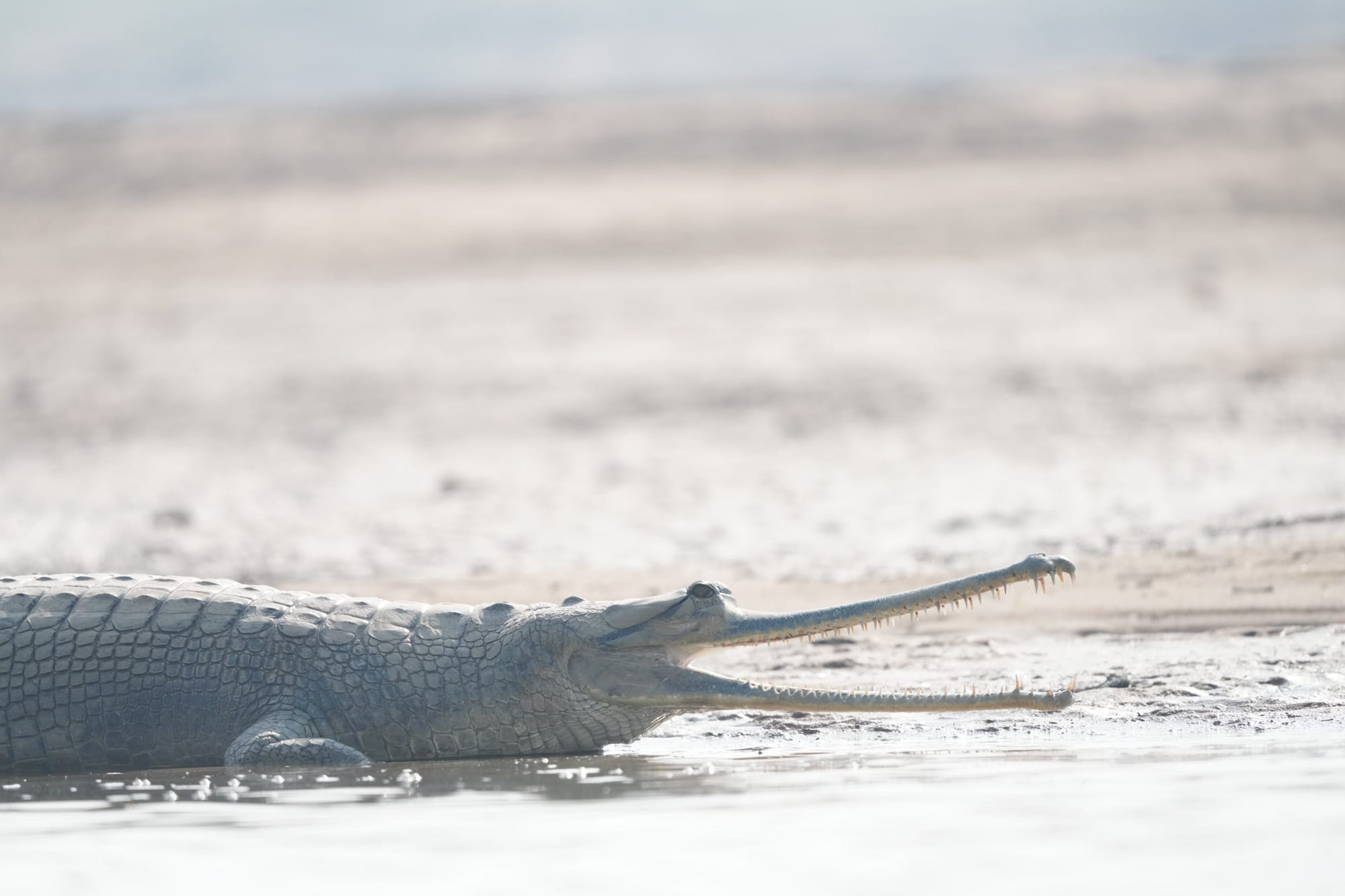 A cleaner cut, Chambal. Cut through the body on purpose, leave the jaws somewhere to go, and the picture settles.ISO 800 · f/6.3 · 1/2000s · 600mm
The edges are the story
The four edges of your frame are among the most powerful storytelling tools you own. They decide what the picture is about, how much room the subject has to breathe, and how much the viewer is left to imagine beyond them. Use them on purpose.
Find good light, and keep shooting.
So, the next time you raise the camera: what will you decide to leave just outside the frame?