




Bharatpur wakes up under fog. Before the gate opens, the wetland is a grey sheet with shapes standing in it, a heron here, a knot of storks there, the water so still it doubles everything above it. Then the sun comes through the mist and the whole park turns to gold.
This is where most first-time visitors make their one mistake. Keoladeo is generous, over 350 bird species packed into 29 square kilometres, many of them so used to the rickshaws that they barely look up, and the instinct is to shoot all of it. You come home with a card full of records and almost nothing you want to print.
This is a guide to the other way of working Bharatpur. When to go, how the trails put you within metres of a nest, what the wetland actually gives a bird photographer, and the few decisions that turn a sighting into a frame you keep. Keoladeo National Park, a former royal duck reserve and now a UNESCO World Heritage Site, puts you closer to wild birds, with less gear, than almost anywhere in India. It rewards patience more than reach.
When should you photograph Bharatpur?
Keoladeo is a winter park. It is at its best from October to March, when Central Asian and Siberian migrants pour onto the lake and the residents move into courtship and nesting. The deep of winter, December through February, is the heart of it: cold, misty mornings, soft low light that lasts, and the lake at its fullest.
October is greener and still building. By late February the migration is at its back end, but the residents are deep into nesting, which is its own kind of gold. The summer monsoon brings the painted storks and open-bills to breed, a different park, hotter and wetter. For most photographers, plan for a winter morning: pre-dawn cold around 10–15°C, mild by afternoon.
 A grey heron in the blue dawn fog. The winter mornings are the reason to be at the gate early.ISO 100 · f/2.8 · 1/1000s · 200mm
Getting around: the trails and the rickshaw
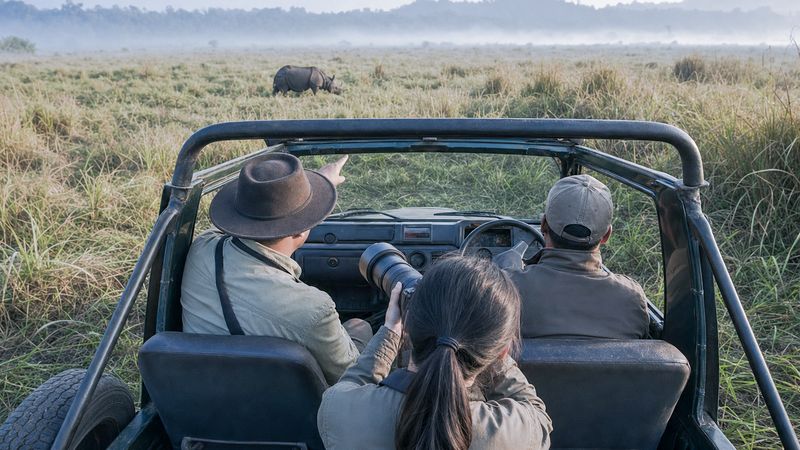
Keoladeo is the rare Indian park with no jeeps. You move through it on foot, by bicycle, or on a cycle-rickshaw, and that changes everything for a photographer. The trails run right alongside the water and the nesting trees, so you end up within metres of birds that would flush from a vehicle. The rickshaw is a slow, quiet, steady platform, and the drivers, many of them lifelong birders who know the park by call, take you to the active nests and roosts.
The access is the park's real gift. It means you do not need enormous reach to fill the frame, and it means you can work the same bird across a whole morning, learning what it is about to do.
 A great white pelican low over the misty lake. On foot or by rickshaw, you work the water's edge.ISO 100 · f/2.8 · 1/1000s · 200mm
What will you photograph?
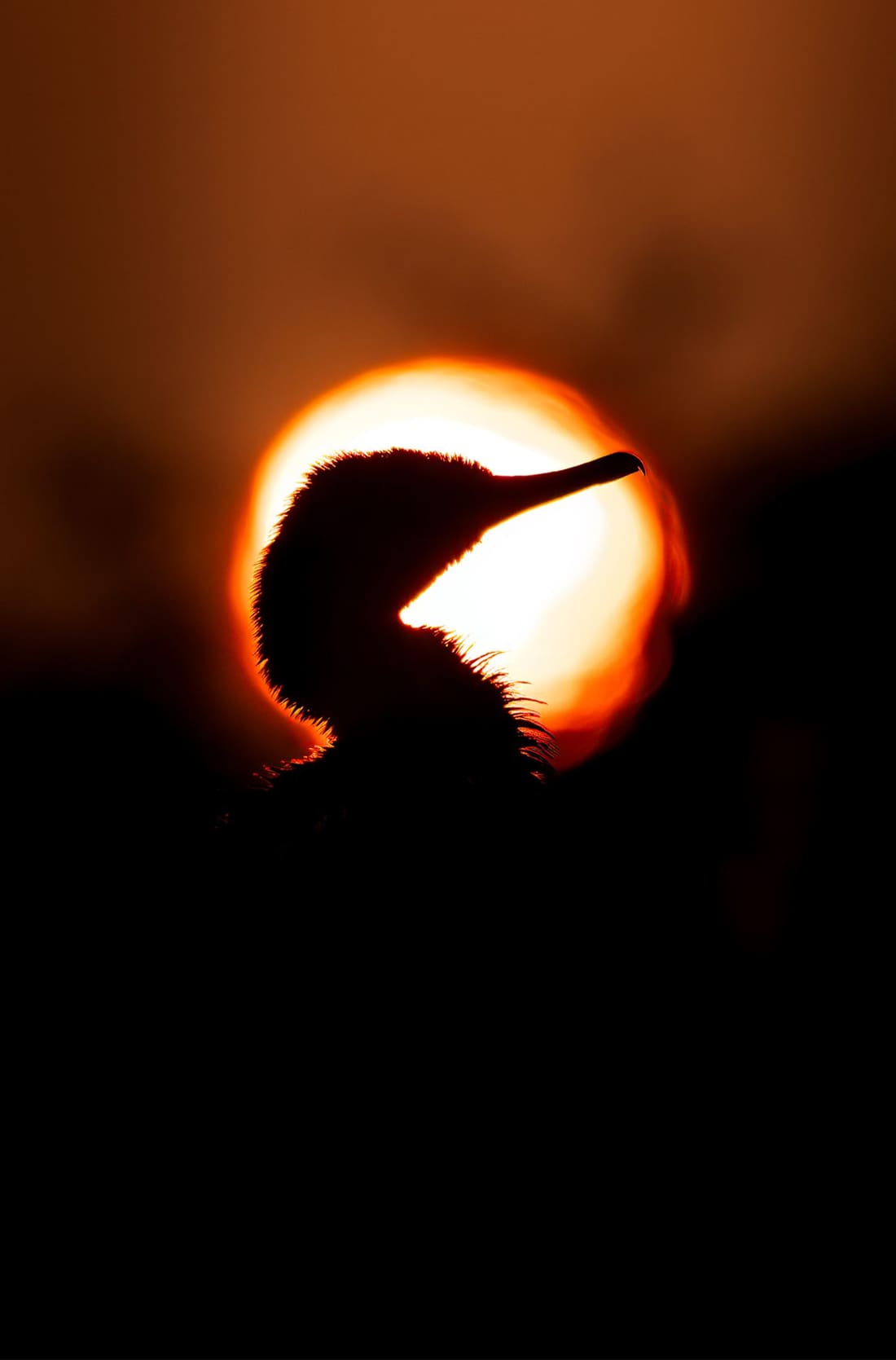
The headline draw is the water birds, and Keoladeo has them in a density and variety that is hard to match. Oriental darters spearing fish and flipping them to swallow. Painted storks and open-billed storks crowded at the nest. Grey and purple herons, egrets, cormorants, and a winter lake thick with ducks and waders. Overhead, raptors quarter the marsh, and in the grassland a pair of sarus cranes, the tallest flying bird in the world, move through in slow display.
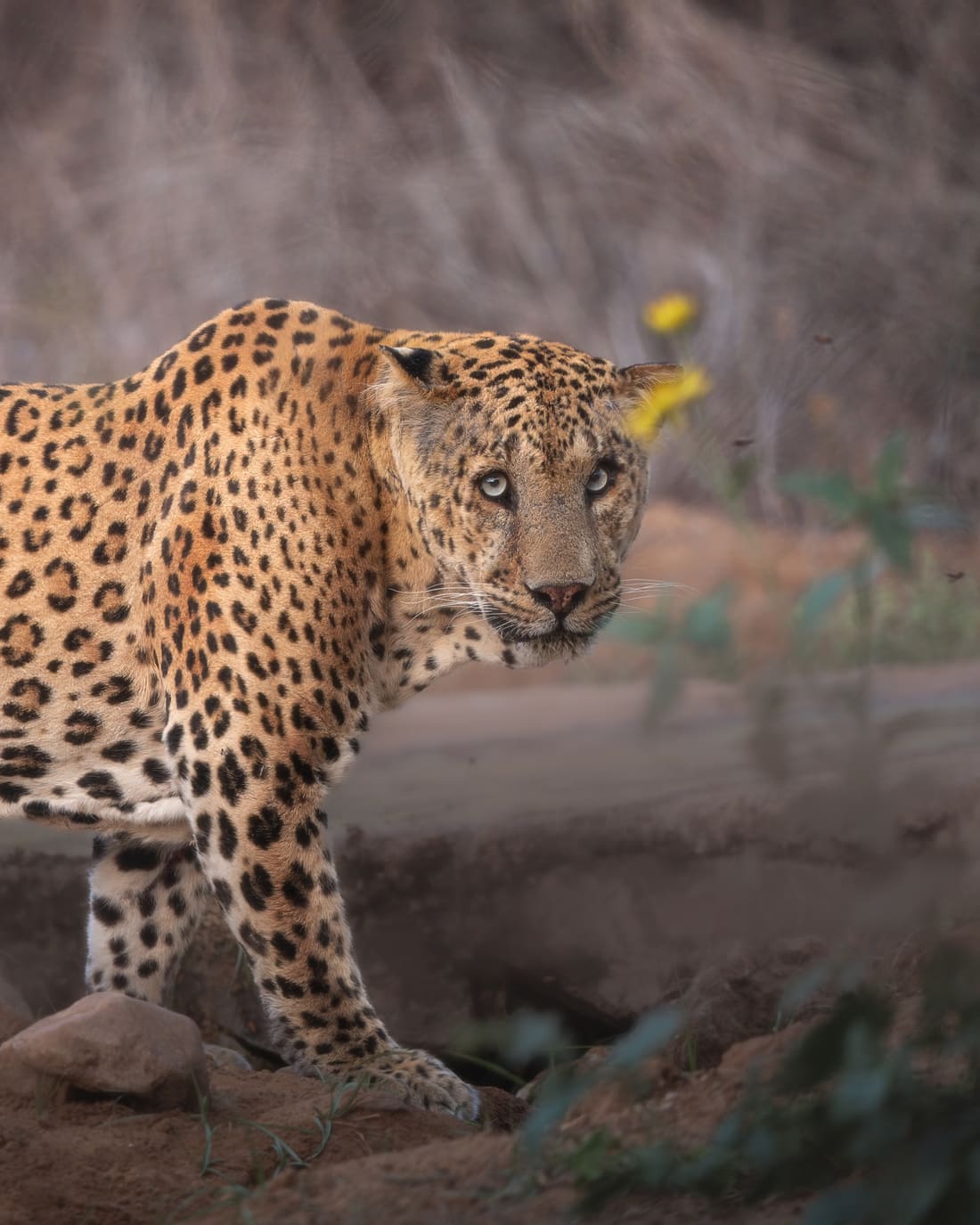
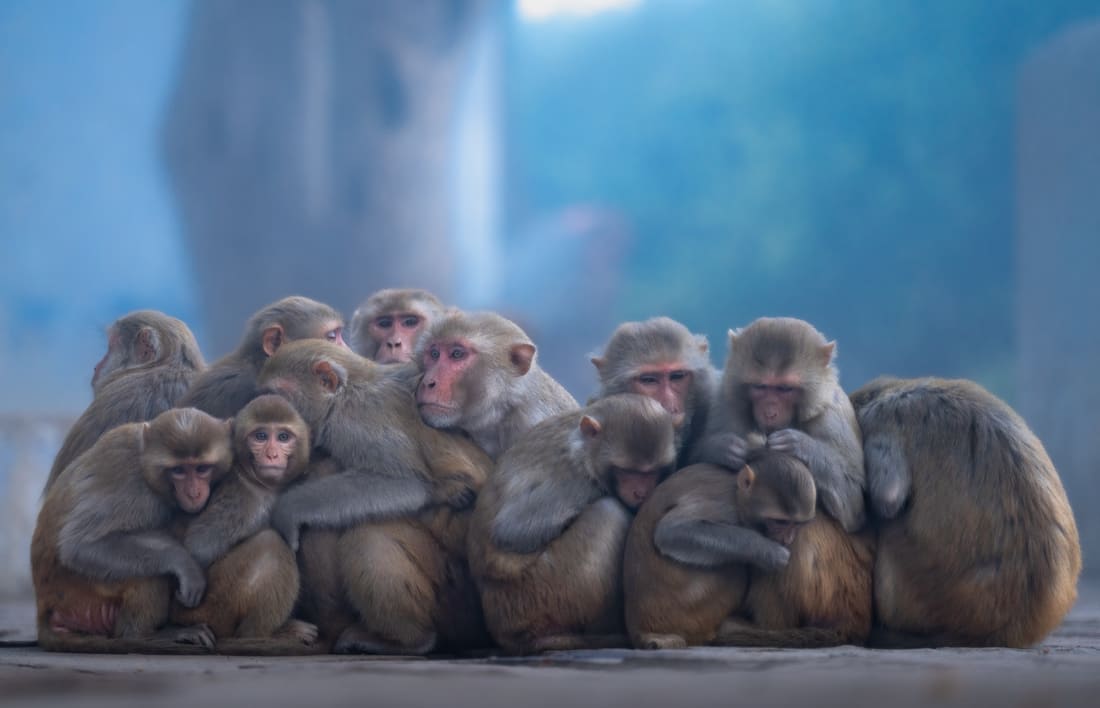
It is not only birds. Rhesus macaques, nilgai, spotted deer and the occasional golden jackal share the park. But you come for the birds, and the lesson the abundance teaches is restraint. You cannot photograph all of it well in four mornings. Pick the subject the light and the behaviour are handing you, and let the rest go.
 An oriental darter flips a fish to swallow it head-first. Watch a bird long enough and you can be ready for the moment.ISO 640 · f/6.3 · 1/2000s · 600mm
Reading the light on the wetland
Bharatpur's mist is a thing to build around, not wait out. Backlit, it lifts a bird off the water and turns a documentary record into an image with depth. The reflections on still dawn water double a subject and hand you symmetry to play with. The half hour after the gate opens is usually the best light of the day, low, warm and directional across the lake.
I have written more fully about the habits that make better frames, and the same ones apply here, sharpened by water and mist. Watch where the sun sits relative to the bird. Use the reflection. Be set up and out at the gate, not arriving as the best light goes.
 A sarus crane in golden backlit water. The light works hardest at the very start and end of the day.ISO 320 · f/6.3 · 1/800s · 600mm
What gear actually earns its place?
Less than you would think, because the access does so much of the work. A 200–600mm zoom, or a long prime, covers most of Keoladeo, where birds are often close and the rickshaw gets you closer. A crop-sensor body with a 100–400mm reaches a long way here. Many photographers work the whole park on a single zoom.
What I would not leave behind: a wider lens, something around 24–70mm, for the environmental frame where the bird is part of the wetland rather than the whole subject. And a beanbag, to steady a long lens on the rickshaw rail. Beyond that, the place rewards field time over the kit list. If you are weighing a body against a lens, remember that technique decides far more than gear here.
Photographing birds well at Bharatpur
The abundance makes it the easiest park in India to photograph badly, because there is always another bird. The fix is the one that improves every wildlife frame: subtract.
Before the shutter, look at the whole frame and decide what to remove. A bright patch of sky or water pulling the eye off the bird. A reed cutting across the head. A busy tangle of branches behind an otherwise clean subject. Get down to the bird's eye level where you can, off the high rickshaw seat, and the background falls away. Then choose, on purpose, between the tight portrait and the wide environmental frame. With still water and a clean reflection, the wide frame often wins, so use it. I unpack this approach in the art of subtraction.
For the birds in flight, the pelicans gliding low and the darters lifting off, set a fast shutter, continuous autofocus with tracking, and a smooth pan, and start with the slower, larger birds before the small fast ones. Never use flash near a nest, never call to a bird, and keep to the trails. The picture is never worth disturbing the colony.
 A bee-eater backlit in green. A clean frame of a common bird beats a cluttered frame of a rare one.ISO 100 · f/2.8 · 1/640s · 200mm
Getting there, and the practical bits
You fly into Delhi (IGI). From there it is roughly a four to five hour drive to Bharatpur, in Rajasthan near the Agra road. The park is entered on foot or by cycle-rickshaw, with entry fees and camera charges paid at the gate. Two long sessions a day, pre-dawn and late afternoon, are the way to work it. The park's dossier in my atlas keeps the wider picture, seasons, access, and the full species list, in one place: Keoladeo Ghana National Park.
Cost varies with how you travel: the hotel, a private versus a shared rickshaw, the number of days. Treat any single figure you read with caution and price the current season. If you would rather have the permits, the veteran rickshaw drivers, and daily editing handled, with a small group to learn alongside, that is what the four-day Bharatpur workshop is for: a wetland at first light, birds at the nest, and your own files reviewed each night.
If you want a field story about patience with a subject in front of you, here is a morning with white rhinos at Lake Nakuru. And if the floodplain calls more than the wetland, here is the Kaziranga field guide.
A few questions I hear
What is the best time to visit Bharatpur for photography? Winter, roughly October to March, with December to February the peak: cold misty mornings, soft low light, and the lake full of migrants while the residents nest. The park changes a lot through the year, so confirm the season before you book.
How many days should I plan? Two full days lets you learn the main wetland trails. Four is better, and turns those days from a set of sightings into a body of work.
Is it jeeps or walking? Neither jeeps nor cars are allowed inside Keoladeo. You explore on foot, by bicycle, or by cycle-rickshaw, which is exactly what puts you within metres of nesting birds.
What lens do I need? A 200–600mm zoom is ideal, but the access means you need less reach here than in most parks. A 100–400mm on a crop body works well. Bring a wider lens too, for environmental frames.
Can a beginner photograph Bharatpur? Yes. The birds are often close and used to people, the rickshaw is a steady platform, and the pace is patient. The limit is rarely your camera. It is light, timing and composition, and those you can learn.