


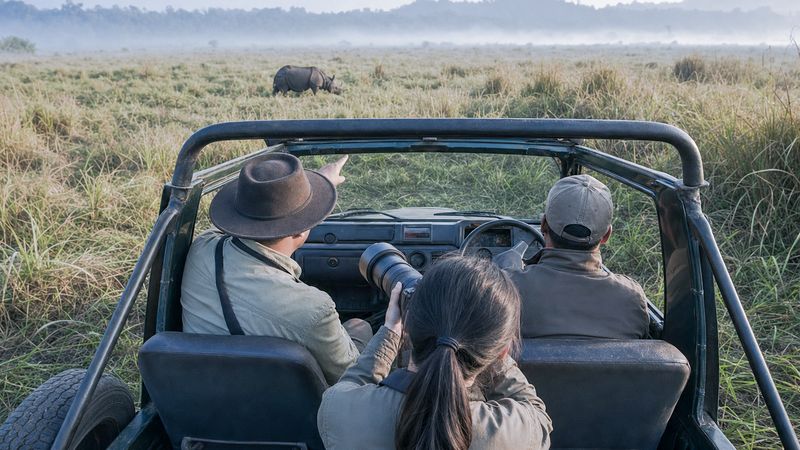

Kaziranga in January wakes up under mist. The Brahmaputra lays it down overnight, and for the first hour after the gates open the grassland is a soft grey field with shapes moving through it. One of those shapes lifts its head, and it is a rhino, close, unbothered, standing exactly where the light is best.
That first morning is where most photographers make their one mistake. The park is generous, rhino in the open, elephant herds, swamp deer, an extraordinary density of raptors and waterbirds, and the instinct is to shoot all of it. You come home with a card full of records and almost nothing you want to print.
This is a guide to the other way of working Kaziranga. When to go, which of the four ranges to choose, what the place actually gives a photographer, and the few decisions that turn a sighting into a frame you keep. Kaziranga National Park is a UNESCO World Heritage Site on the floodplain of the Brahmaputra, and it holds the largest population of the greater one-horned rhino anywhere. It rewards patience more than reach.
When should you photograph Kaziranga?
The park is open from roughly November to April, and the whole of that window is workable. If you want the conditions that make the strongest photographs, aim for late December through February.
That is when the mornings come in cold and misty, the grass has died back after the monsoon so animals show in the open, and the low light stays soft for longer. November is greener and a little hazier. March and April are warmer, drier and good for activity, but you lose the mist that gives the place its mood. January is the heart of it. Plan for early starts and cold open jeeps at dawn, around 8–12°C, mild by afternoon.
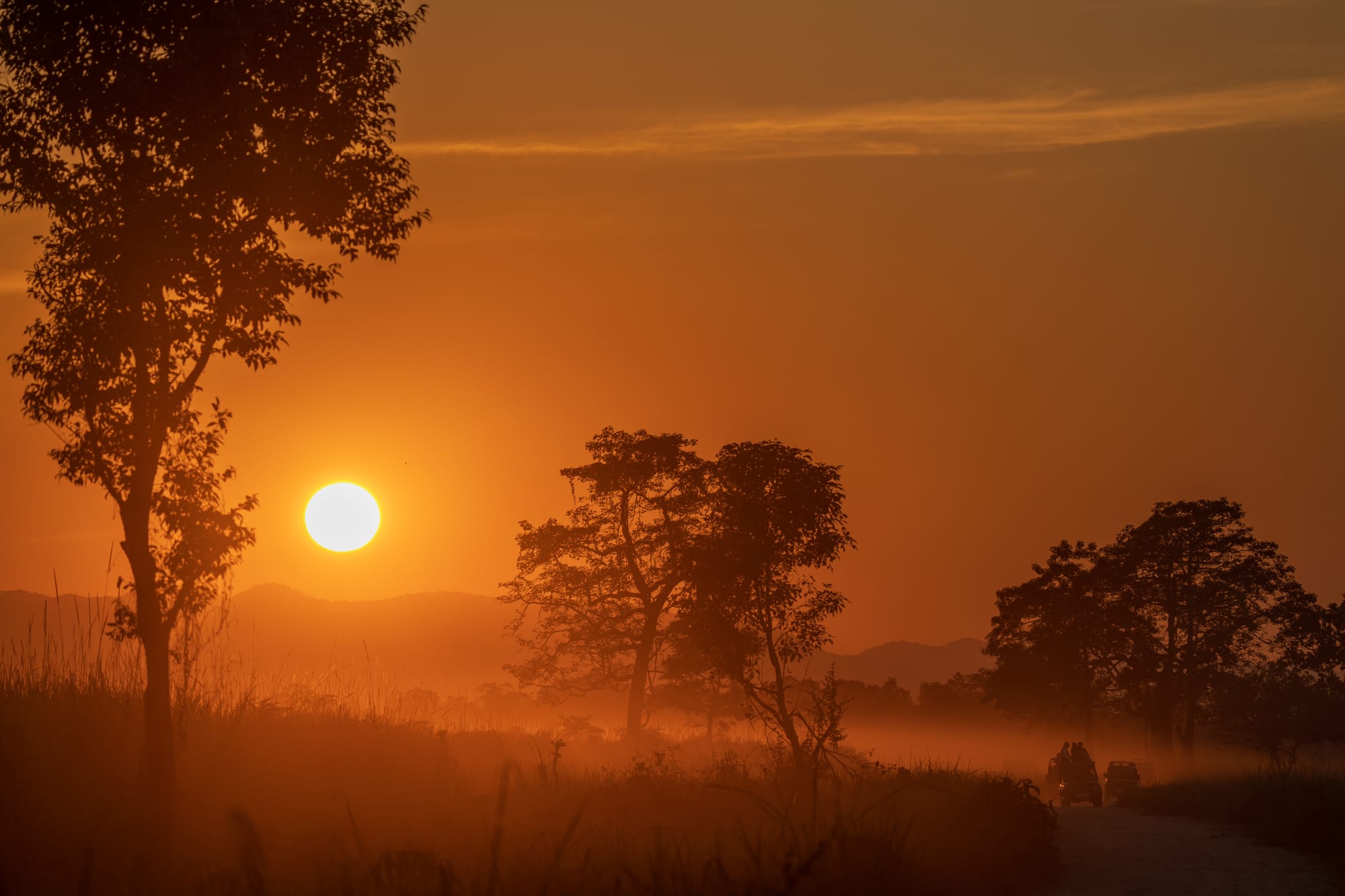 The light works at both ends of the day. Evening mist over the Brahmaputra floodplain.ISO 100 · f/6.3 · 1/1000s · 200mm
A practical note most lists skip: the park closes through the monsoon because the Brahmaputra floods it, and the reopening date shifts year to year with the water. Confirm the current season before you book flights.
Which range should you work?
Kaziranga has four tourism ranges, and they are not interchangeable. Knowing what each one gives you is half of planning the visit.
Three of them sit on the open floodplain and hold the classic Kaziranga of rhino and grassland. The Central range (Kohora) is the postcard: rhino, swamp deer and raptors in open country, the view the park is known for. The Western range (Bagori) is often the best for rhino density and clean, open grassland light, the range I point people to when they want the environmental rhino frame. The Eastern range (Agoratoli) is the wetland heart, quieter and richer in birds, pelicans, storks, eagles and large numbers of waterfowl, with softer light and more room to work slowly.
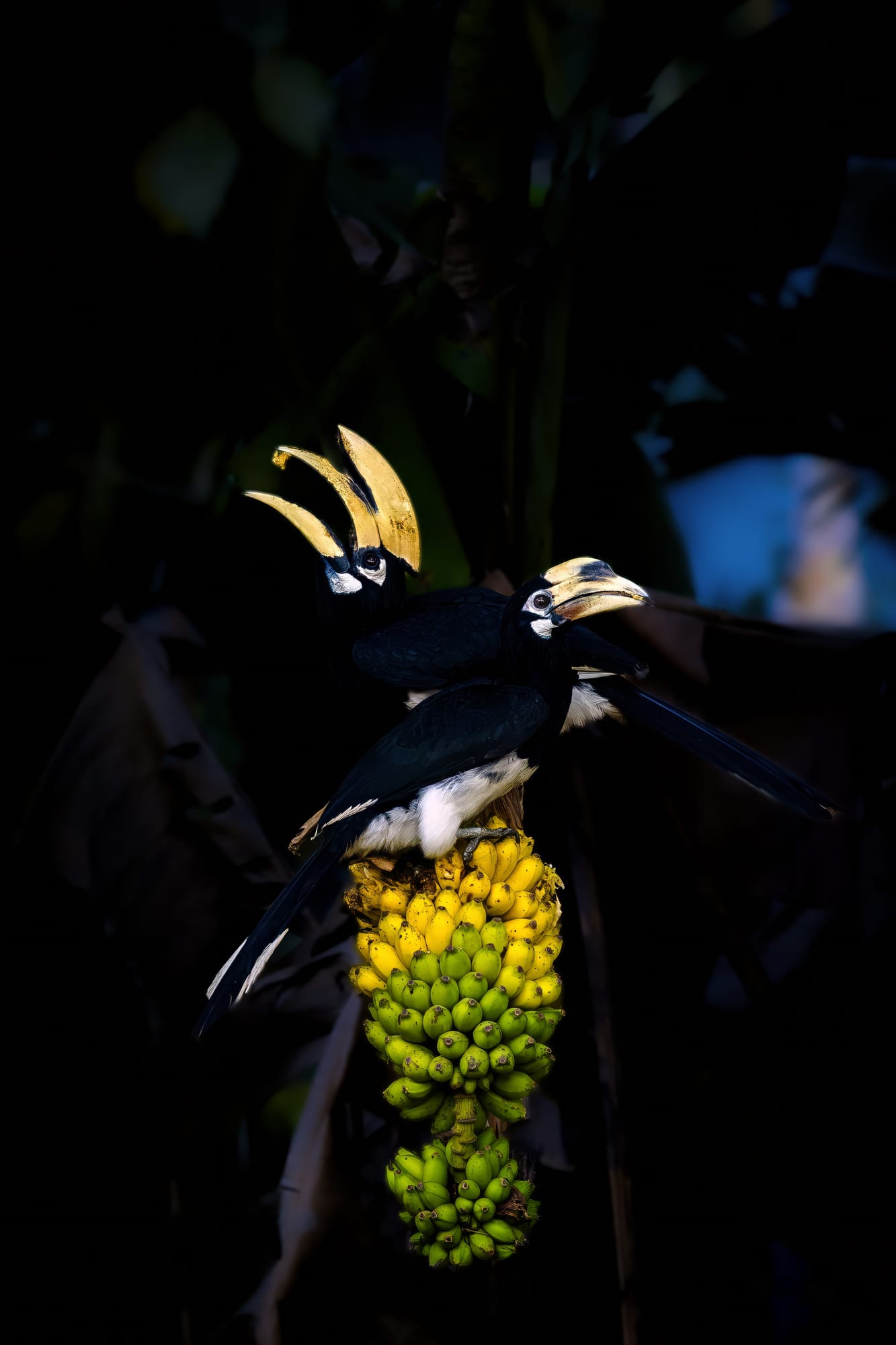 An oriental pied hornbill near the Kohora range.ISO 2500 · f/7.1 · 1/800s · 500mm
The fourth, the Burapahar range (Ghorakati), is different country: hills and dense forest rather than floodplain, and the first gate you reach driving in from Guwahati. It is the quietest of the four, and the one for birds, hornbills and the hoolock gibbon. You come here for the forest, not the open rhino frame.
If you only have a couple of mornings, do Western for rhino and Central for variety. Given a full week, work the three floodplain ranges across morning and afternoon drives, which is how the Kaziranga workshop is built, and add Burapahar if birds and forest are what you are after. Either way, the light and the subject change under you instead of repeating.
What will you actually photograph?
The headline animal is the greater one-horned rhino, and it is here in a way it is nowhere else. But the floodplain is far more than rhino.
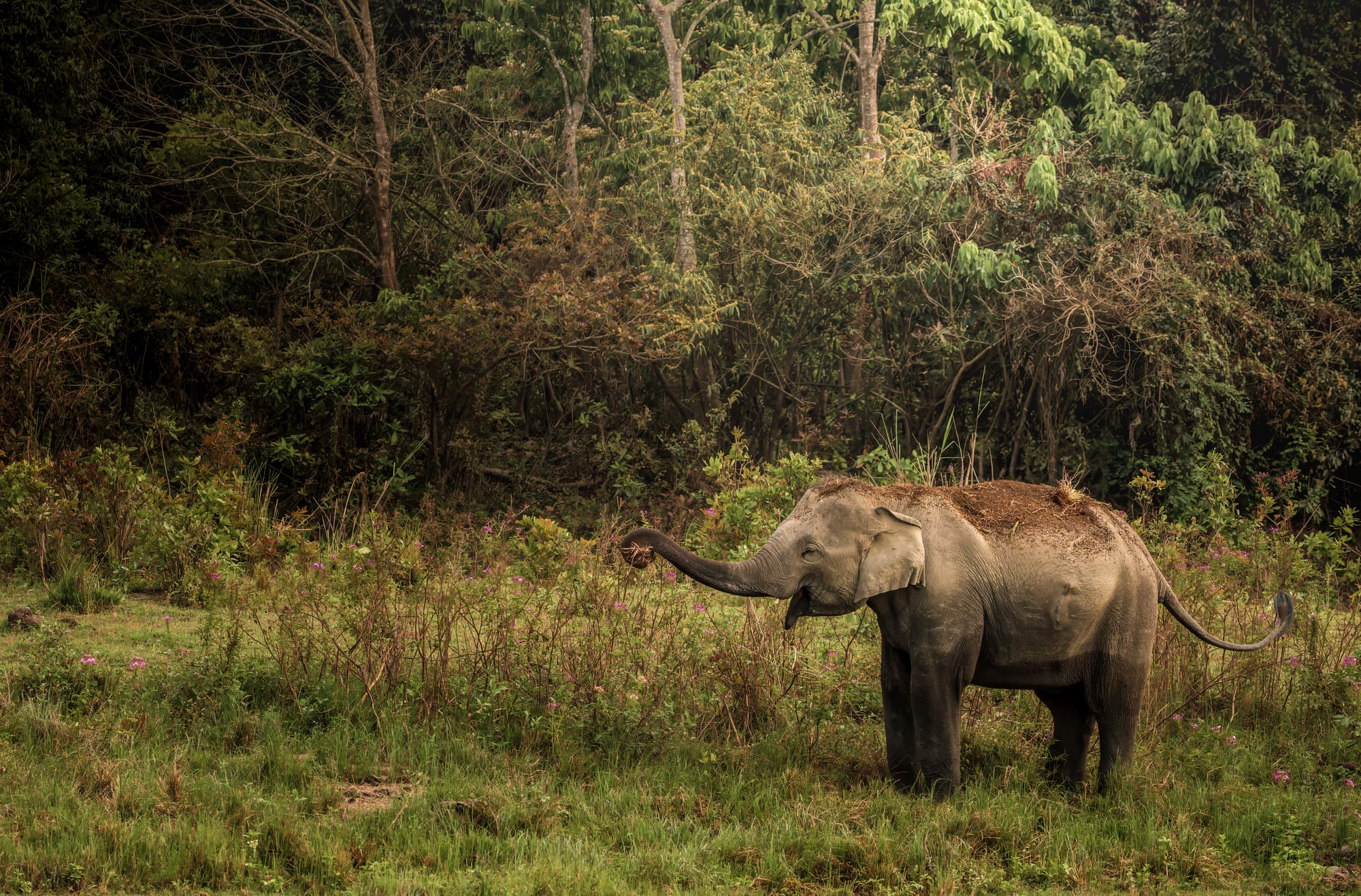 Wild elephant in the grass. The floodplain is far more than rhino.
Wild elephant move through in herds. Asiatic water buffalo and swamp deer feed in the grass. Kaziranga also holds one of India's densest tiger populations, though the tall grass makes a tiger a matter of luck more than plan. The Eastern wetlands turn into a bird photographer's morning: waders, raptors and waterfowl in numbers. And in the forest patches, mostly in the Burapahar hills, you can find the western hoolock gibbon, India's only ape, high in the canopy.
 India's only ape, the western hoolock gibbon, high in the trees at Kaziranga.
The lesson the variety teaches is restraint. You cannot photograph all of it well in five days. Pick the subjects the light and the range are handing you that morning, and let the rest go.
Reading the light on the floodplain
Kaziranga's mist is a thing to build around, not wait out. Backlit, it lifts a rhino off the grass and turns a flat record into an image with depth. The half hour after the gates open is usually the best light of the day, low, warm and directional, raking across the open country.
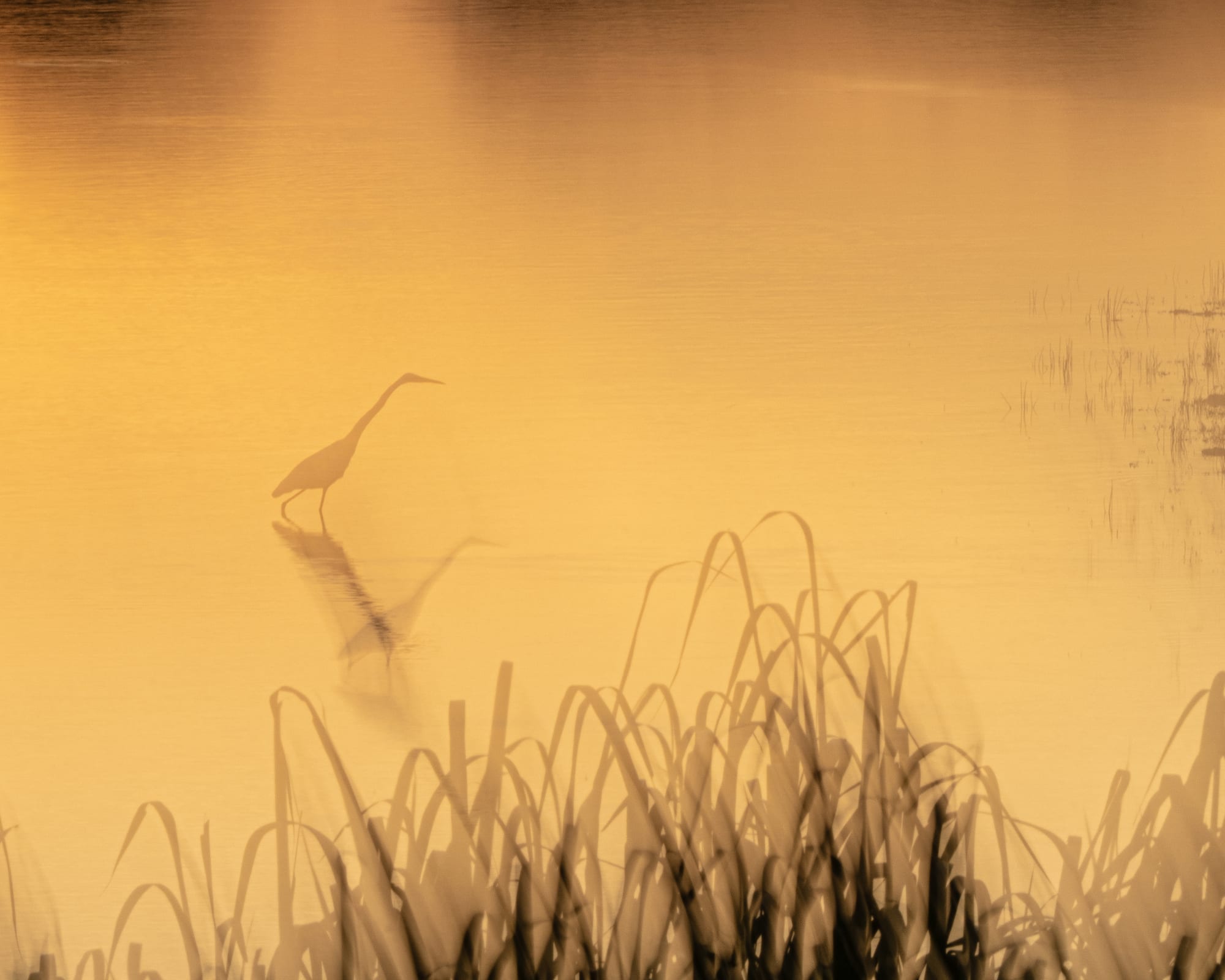 Backlit grass and river mist. A slow shutter lets the light smear, the reason to be out at the gate.ISO 100 · f/32 · 1/6s · 255mm
I have written more fully about the habits that make better frames, and the same ones apply here, sharpened by the floodplain. Watch where the sun sits relative to the animal. Let the mist do work for you. Be set up and out at the gate, not arriving as the best light goes.
What gear actually earns its place?
Less than you would think. A 200–600mm zoom, or a long prime if you own one, covers most of Kaziranga, where animals are often in the open and large in the frame. A crop-sensor body with a 100–400mm reaches a long way here too. Many photographers work Kaziranga on a single zoom.
What I would not leave behind: a wider lens, something around 24–70mm, for the environmental frame where the rhino is part of the floodplain rather than the whole subject. And a beanbag, to steady a long lens over the jeep door. Beyond that, the place rewards field time over the kit list. If you are weighing a body against a lens, remember that technique decides far more than gear here.
Photographing the one-horned rhino well
It is the easiest animal at Kaziranga to photograph badly, because it is so available. The fix is the one that improves every wildlife frame: subtract.
Before the shutter, look at the whole frame and decide what to remove. A bright patch of sky pulling the eye off the animal. A stem cutting across the head. A busy tree line behind an otherwise clean subject. Drop to the animal's eye level where you safely can, off the high jeep seat, and the background falls away and the rhino sits forward. Then choose, on purpose, between the tight portrait and the wide environmental frame. The floodplain is one of the few places the wide frame genuinely wins, so use it. I unpack this approach in the art of subtraction.
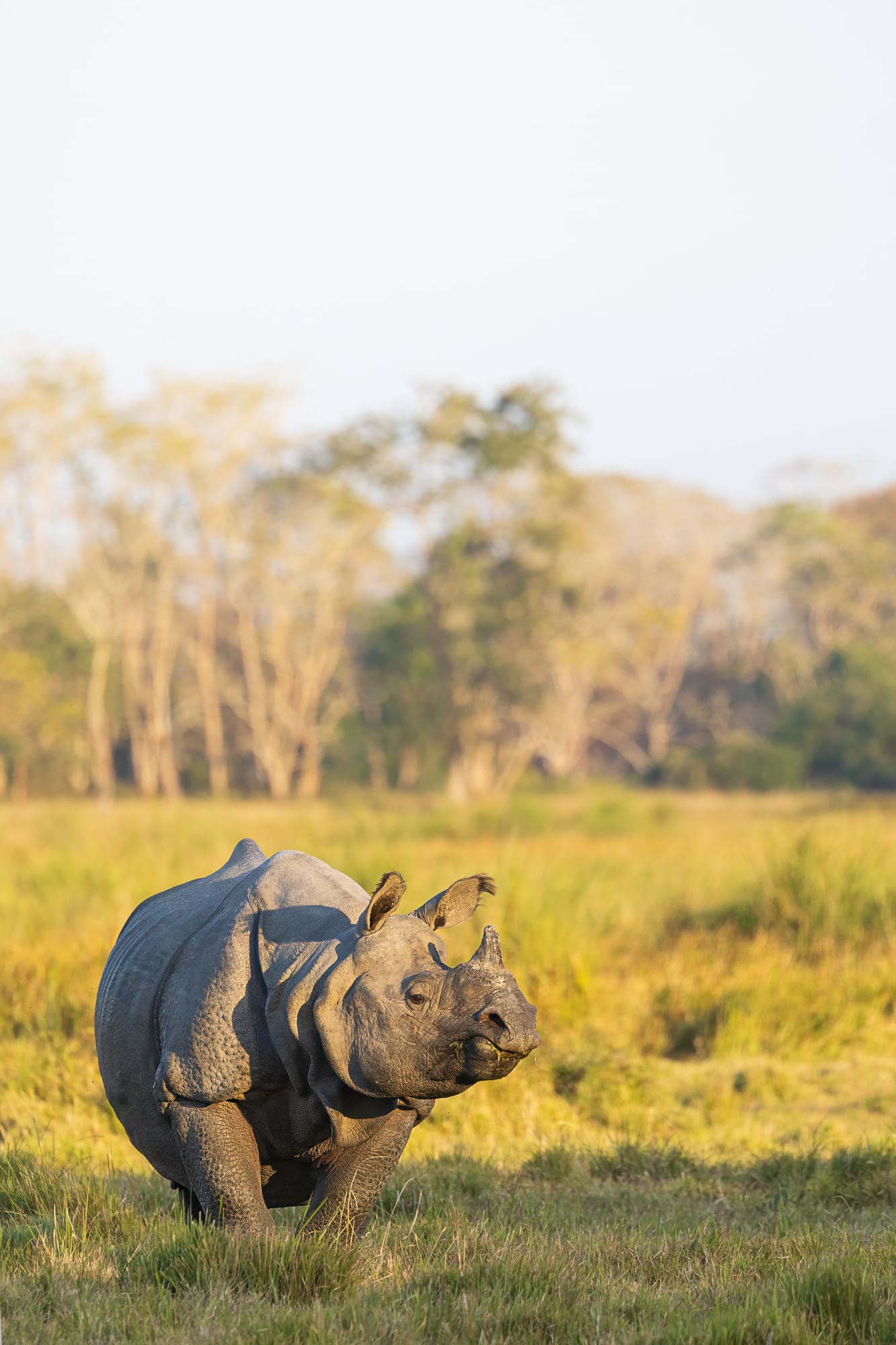 A greater one-horned rhino in tall, backlit grass. The wide environmental frame is the one to make.
Stay in the jeep, keep your distance, and never call to or crowd a rhino. They are genuinely wild and can charge. The picture is never worth changing the animal's behaviour.
How the jeep safaris work
Kaziranga is photographed from an open jeep, a 4x4 gypsy with a driver and a forest guide. Drives run in two slots: the first hour after the gates open, when the mist and the low light are best, and again in the afternoon. You book per range and per drive, so a full day is usually one range in the morning and another after lunch.
Each range has its own gate and its own permit. The entry fee, camera fee and jeep hire are paid at the gate, with separate rates for Indian and foreign nationals, and in the December to January peak the slots fill, so book a few days ahead or let a lodge handle it. There is also an early-morning elephant-back safari in some ranges, but for photography the jeep is the better platform: you choose your line, you can drop to eye level over the door, and you can stay with one animal as the light changes.
Getting there, and the practical bits
You fly into Guwahati (GAU). From there it is roughly a five-hour drive to the Kohora side of the park, where most lodges sit. For seasons, access, and the species picture in one place, the atlas holds the full dossier: Kaziranga National Park.
Cost varies with how you travel: the lodge, a private versus a shared jeep, the number of drives. Treat any single figure you read with caution and price the current season. If you would rather have the permits, ranges, jeeps and daily editing handled, with a small group to learn alongside, that is what the five-day Kaziranga workshop is for: six photographers, the three floodplain ranges, morning and evening light, and your own files reviewed each night.
If you want a field story that shows what patience looks like with a rhino in front of you, here is a morning with white rhinos at Lake Nakuru. And when you are ready to photograph the one-horned rhino on its own floodplain, come to Kaziranga.
A few questions I hear
What is the best time to visit Kaziranga for photography? Late December to February. Cold, misty mornings, open grass, and soft low light. The park runs roughly November to April. Confirm the season's reopening date before booking, as it moves with the floodwaters.
Which range is best? Western (Bagori) for rhino in open grassland, Central (Kohora) for the classic mix, Eastern (Agoratoli) for birds and wetland, and Burapahar (Ghorakati) for hill forest, hornbills and the hoolock gibbon. Work the three floodplain ranges first, then add Burapahar if you have the days.
What lens do I need? A 200–600mm zoom is ideal. A 100–400mm on a crop body works well. Bring a wider lens too, for environmental frames. One zoom is enough for many people.
How many days should I plan? Three full days covers the floodplain ranges. Five is better, lets you add Burapahar, and turns those days from a set of sightings into a body of work.
Can a beginner photograph Kaziranga? Yes. The animals are often in the open and the jeep is a steady platform. The limit is rarely your camera. It is light, timing and composition, and those you can learn.
How do the jeep safaris work at Kaziranga? Drives are by open jeep, morning and afternoon, booked per range and per drive. Each range has its own gate, with entry, camera and jeep fees paid there and different rates for Indian and foreign nationals. In the December to January peak, book a few days ahead. An elephant-back safari runs in some ranges, but the jeep is the better platform for photography.